For Malaysian FMCG suppliers, the recent shipping routes blocked in the Strait of Hormuz have moved past geopolitical headlines and directly onto the P&L statement. The cost of moving and packaging goods like FMCG products are climbing, creating an immediate, bottom-line challenge for supply chain leaders across the region.
The data underscores the urgency: according to recent reports in The Star, over 51% of Malaysian firms are bracing for total costs to surge by up to 20% as the Middle East conflict triggers a severe oil shock. The resulting war update has led to “financially unbearable” fuel price hikes and heightened logistics pressures, even prompting calls for emergency waivers on port and transport charges for goods shipping to Malaysia. More importantly, as ACCCIM President Datuk Ng Yih Pyng recently warned, the resulting spike in global oil prices is steadily squeezing corporate profit margins and crippling business cash flow across the supply chain. This is especially true for essential industrial inputs linked to crude oil, driving up the plastic price that the FMCG sector heavily relies upon.
For local manufacturers, this confluence of rising freight and manufacturing cost presents a significant risk of margin compression. While aggressive price adjustments can negatively impact market positioning and consumer demand, the alternative of unmitigated margin erosion is rarely a viable long-term strategy.
However, this is not a scenario without a strategic way forward. While external macroeconomic shocks and global shipping lanes remain outside your control, your internal OPEX (Operating Expenditure) and working capital cycle are entirely manageable. The most resilient FMCG leaders are securing their EBITDA (Core Operational Profit) by looking inward, neutralizing the ‘hidden costs’ in local operations that are no longer unsustainable.
The following discusses foreseeable critical challenges for Malaysian FMCG manufacturers cascaded by the ongoing Middle East conflict, and how digitalization can act as the solutions protecting your EBIDTA and working capital.
In General Trade (GT), many FMCG manufacturers rely on regional distributors to reach thousands of traditional outlets like kedai runcit. When news of global instability like the Middle East conflict hits, these distributors often react by placing “inflated” sales orders. Their goal is to “forward buy”: stocking up now because they anticipate that spike in plastic price and cost of ingredients will trigger a massive price hike by the manufacturer next month. Because the manufacturer often lacks visibility into what the distributor is actually moving to retailers, they ramp up production to meet this artificial boom in demand.
The problem intensifies when the global logistics ripple finally reaches Malaysian shores. Even local deliveries face a “bottleneck” because ports are congested with backlogged shipments due to shipping to Malaysia affected by the Straits of Hormuz blockade. By the time the manufacturer’s overproduced stock finally arrives at the distributor, and is eventually sent to the retail shelf, weeks of precious shelf life have already vanished. With inflation slowing down consumer spending, the stock sits stagnant until it nears expiry. The retailer then pushes this “wastage” back to the distributor, who pushes it back to the manufacturer. This leaves the manufacturer footed with a double loss: the high cost of the initial overproduction and the heavy financial burden of covering expired goods returns.
By integrating a Distribution Management System (DMS), FMCG manufacturers stop relying on a distributor’s panicked forecast in production planning. Instead, manufacturers’ management can use DMS like the ones offered by DATANORY FMCG Digital Ecosystem to look at real-time “Stock-Out” data synced directly from the field, with immediate transparency into the exact number of “Sell–Ins” to the distributors / retailers. This provides immediate inventory visibility when actual sales to retailers are slowing down despite the distributor’s massive order, so that the manufacturer can immediately scale back production. Implementing DATANORY DMS prevents FMCG manufacturers from over production that committing precious capital to high-cost raw materials (mainly oil-dependent resins in plastic packaging) to produce stock that is destined to become an expired return (Wastage of good return) by closing the visibility gap of distributor’s stock-out data.

In the high-stakes environment of Modern Trade (MT), Key Account Managers (KAMs) often face a specific contractual hurdle: the “Deemed Confirmed” PO trap. Big retail chains use B2B platforms where an order is treated as automatically approved if the supplier does not confirm or reject it within a certain window. Manufacturers who miss this window are legally bound to fulfill an order they may not even have in stock.
Failing to meet these “auto-approved” orders leads to heavy fill-rate penalties, often 20% of the PO value, and damaging “scorecard” demotions that can lose you shelf space. This is especially risky when the Middle East conflict creates shipping delays that make stock levels unpredictable. Manufacturers could be penalized for failing to deliver an order they didn’t even know was “confirmed.”
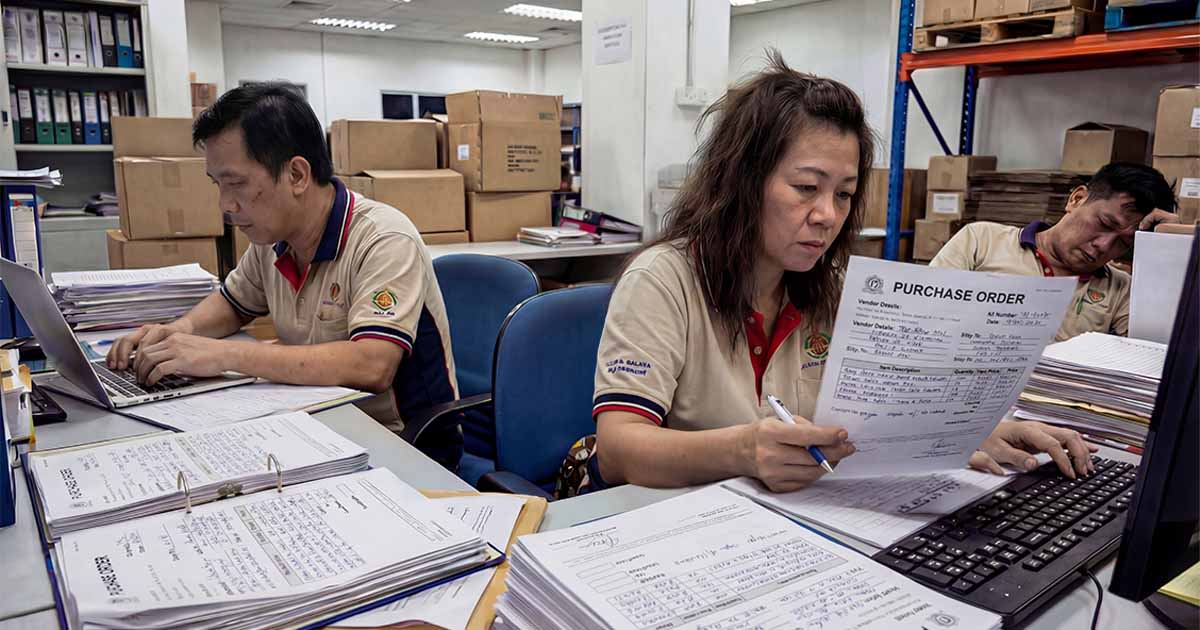
To resolve this issue, many FMCG manufacturers turn to Sales Force Automation solutions to gain full control, visibility and automation over their Purchase Order process. Sales Force Automation tools equipped with artificial intelligence business solutions like DATANORY’s allow FMCG manufacturers to mass upload hundreds of Purchase Orders from retailers and turn it into Sales Order without re-key-in the POs into the system one by one. This prevents delays or missing out on some POs which causes the delivery to not arrive, incurring the penalties.
Additionally, the AIPO in DATANORY’s Sales Force Automation tool automatically converts Purchase Orders into Sales Orders, and FMCG owner can also design their own approval process to handling the special / exceptional orders which helping sales team and admin skip the whole manual process of retyping POs and safeguard the Sales Order control . This not only speeds up the PO conversion process and prevents delayed generation of Sales Order leading to late or missed deliveries, but also helps Sales Orders be free of errors, especially manual key-in errors. With global instability already straining manufacturing costs, the automation of Modern Trade PO process by DATANORY AIPO allows manufacturers to avoid further financial losses in heavy penalties, by eliminating delays or misses in PO conversion so that retailers’ orders are fulfilled on time without mistakes.
The 2026 maritime and energy landscape is a clear signal that manual processes are no longer sustainable for the modern manufacturer. By using DATANORY to shift away from the “Distributor Inflated Orders” through real-time sell-in data, dodging penalties via automating PO compilation and conversion, and closing Sales Order gaps with DATANORY AIPO, your FMCG business can finally reclaim full control and transparency for reliable financial autonomy, decision-making and operational efficiency. Proactively implementing this level of digitalization using Distribution Management & Salesforce Automation Solutions ensures that every sales team process is fully governable and visible, effectively eliminating the manual errors and constant back-and-forth between departments that often cause deficit-inducing delays and mishaps. Most importantly, DATANORY gives inventory visibility that keeps capital where it belongs, which is with the manufacturer, by enabling the cut back on unnecessary production spending and avoid waste and economic burden during this critical period of rising oil prices.
If you are an FMCG manufacturer ready to insulate your bottom line from external shocks and secure your fiscal resilience, our FMCG experts are here to guide you. Reach out today for a FREE consultation or learn how DATANORY can deficit-proof your operations, eliminate departmental bottlenecks, and ensure your capital stays where it belongs, driving your FMCG business forward in an ever-changing landscape.
End of Content.
Expand your business with personalised automation.
Every business has its own culture, procedure, and processes; there is no one-size-fits-all software in the market to fit all unique needs and requirements without compromising on results.
By knowing what clients are facing, their challenges, requirements and expectations, we are able to deliver a tailored-fit, customized solution with a higher success rate, shorter adaptation period, and greater flexibility.
MC Crenergy has the experience and expertise to customize technology that empowers client’s operations. A customized solution that fits client’s needs perfectly, reducing friction and resistance, while promoting greater success in adaptation & business performance.