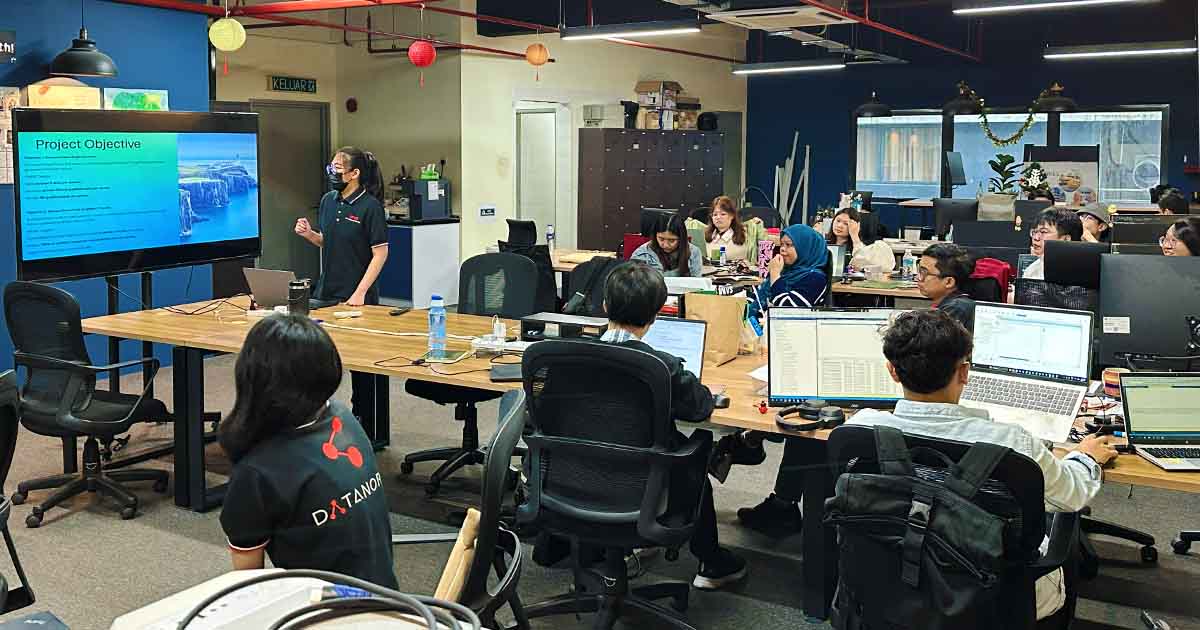

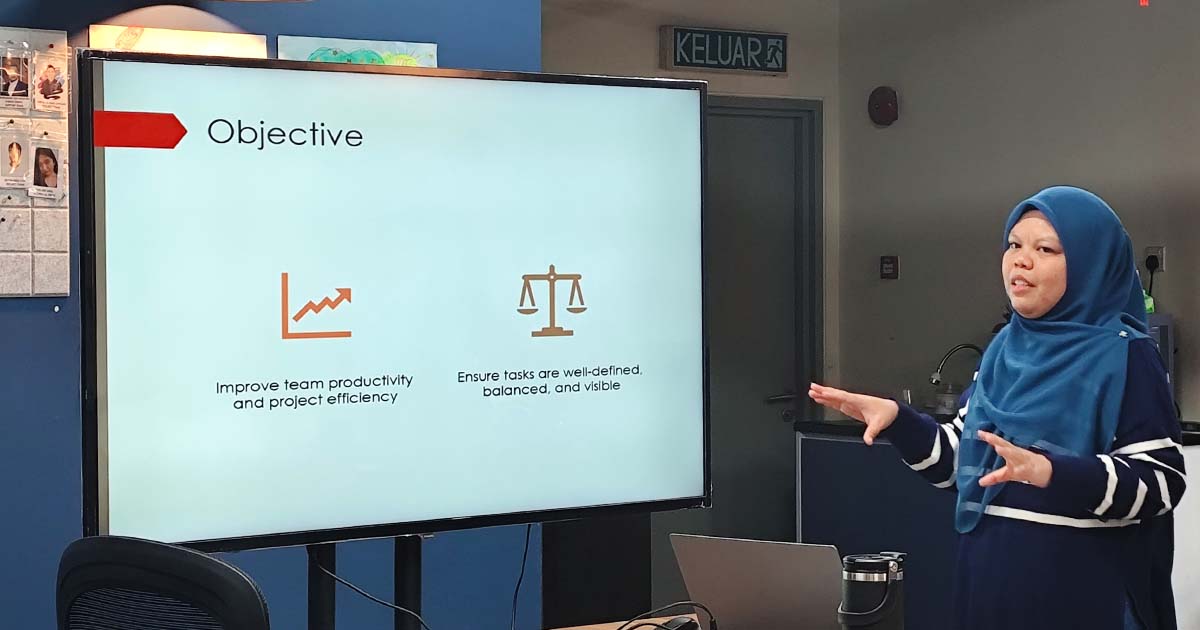

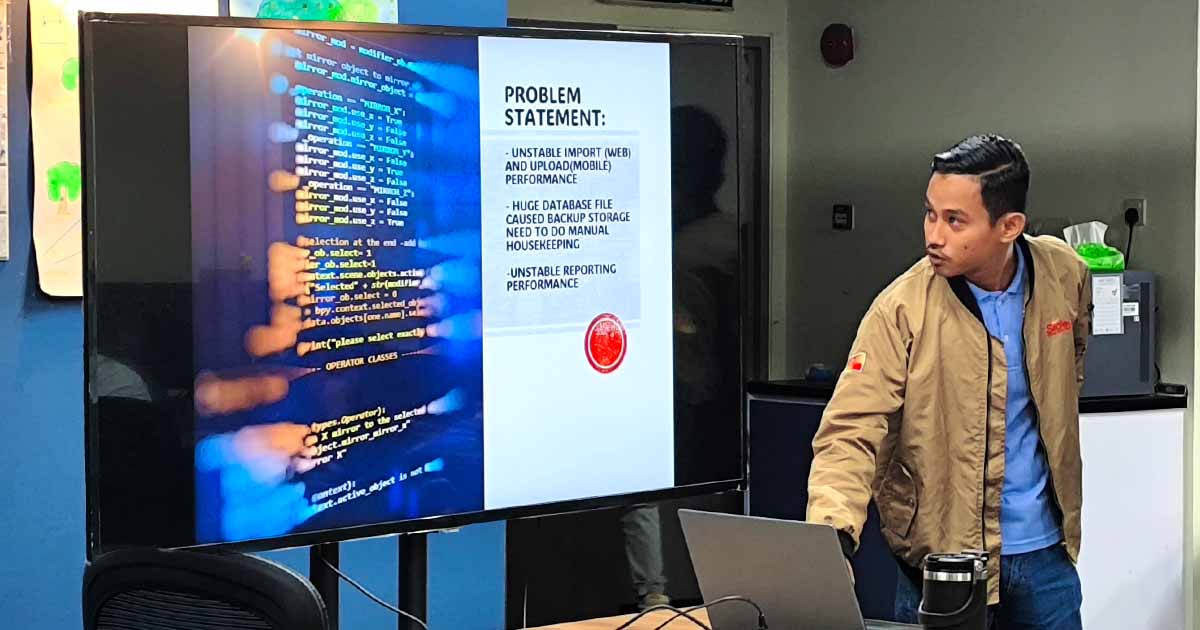







In the 2026 FMCG landscape, operational excellence has undergone a fundamental shift. What makes suppliers at the top of their competition is no longer just about the volume and shipping speed of goods; it is defined by the spontaneity and accuracy of the data moving behind the scenes between different departments and Route-to-Market hierarchies. As consumer demands fluctuate faster than ever, the “digital pulse” of your supply chain determines whether you are leading the market or simply chasing it.
Most successful manufacturers and distributors often find themselves hit by a silent productivity killers known as “Shadow Tasks”, which are repetitive admin work and fixing errors. These are the manual workarounds to limited system functions such as lack of specific filtering function to view reporting dashboard of product by SKU level, the lack of efficiency and accuracy in doing manual key-ins and analysis with Excel spreadsheets, and the double-entry data fixes due to unintegrated platforms. These time-inefficient roadblocks exist solely because legacy systems haven’t kept pace with the sheer scale and complexity of modern business. When your team is busy managing the limitations of your software, they aren’t managing the growth of your company.
As an experienced software development company in Malaysia, who engineers solutions to help suppliers accurately manage, integrate and analyze FMCG data, we believe that the reliability and modernity of our solutions isn’t a static state, but built through continuous, proactive innovation that is cultivated not just by training our staff to manage code, rather training them to think like industry analysts.
Therefore, we created our Leadership Acceleration Programme (LAP) for our employees, in which they carried out their Final Capstone Project. In this initiative, our teams are challenged to identify the deep-seated inefficiencies that cost FMCG business owners significant time and revenue. By diagnosing specific issues like departmental, category-based data silos, poor data organisation and high-friction manual tasks, our data solutions architects developed seamless integrated digital solutions to resolve the niche, high-friction operational issues that keep FMCG managers awake at night.
Our objective remains constant: streamlining the FMCG supply chain to drive a superior Return on Investment (ROI) and maximizing operational velocity for manufacturers and distributors. Below are 8 core frameworks that emerged from our employees’ Final Capstone Project as part of our internal Leadership Acceleration Programme (LAP), supported by internal pilot data that demonstrates the tangible ROI of shifting from manual maintenance to automated optimization.

With their seasoned experience in our near two-decades established software development company in Malaysia, our employees observed that manufacturers often suffer from a “knowledge gap” where business logic is trapped in emails while technical execution lives in silos. This problem is primarily caused by a reliance on transient, unorganized communication channels where critical requirements are scattered across private threads rather than being centrally compiled.
A specific case frequently seen in corporate organizations occurs when a requirement change is discussed in a fast-moving WhatsApp group but never formally documented or organized. Because there is no centralized file compilation, developers unknowingly continue working on “dead” technical silos based on outdated information, while supervisors face massive delays trying to cross-reference messages to oversee the task. This eventually prevents management from updating stakeholders or keeping up with real-time market demands because the technical reality has drifted too far from the original business objective.
Our centralized system solves this by implementing “Problem-Frame-Oriented Traceability,” a method that ensures every business requirement is anchored directly to its technical file. This approach is backed by research in the International Journal of Informatics Visualisation, which highlights that bidirectional traceability is a recognized industrial standard for aligning technical execution with business logic. By breaking complex problems into manageable sub-problems, our tool identifies exactly which files are affected by a change, reducing document retrieval time from an hour of searching through silos to just five minutes and resulted in a >50% reduction in search-time overhead, additionally allowing the software to evolve with the business rather than against it.
Our presenters identified that FMCG distributors often struggle with rigid reporting formats required by different retail giants. To resolve this, they moved away from hard-coded exports toward a Decoupled Configuration Model, allowing non-technical managers to customize their own data outputs instantly. This enables FMCG industry managers in wasting significantly less time on having to constantly negotiate with vendor to make changes to the software just so they can enable specific filtering options so that they can have exported data results aligned with their analysis needs, which takes up the time they could have spend on real work such as strategising to improve sales and increase FMCG business ROI.
The Decoupled Configuration Model returned autonomy to the business user and eliminate developer bottlenecks, and the Internal Testing Results found that custom configurations now take 10 minutes instead of hours, yielding a 30% reduction in development overhead.
Human error in Master Data such as SKUs, pricing, and customer lists is a primary driver of costly shipping inaccuracies and inventory discrepancies for FMCG manufacturers. We applied artificial intelligence business solutions to build a “ruthless” automated testing framework that validates every scenario, every time. This eliminated “human error” and ensures that only 100% accurate data enters the digital ecosystem. The internal testing result yielded a 70% efficiency gain in testing execution, ensuring that bugs are caught in the lab, not at the warehouse dock. The American Scientific Journal for Engineering, Technology, and Sciences (ASRJET) backs this up, in which it proved that automation is essential for data integrity in high-transaction environments, and another time and cost-efficient benefit is that it cuts down data cleansing time to 26%.
As data scales, legacy databases often “bloat,” leading to unstable mobile sales app performance for FMCG supplier to use. Our team developed automated scripts that archive old transactions and prune unused tables without human intervention, with the goal of ensuring system speed remains constant even as the FMCG supplier’s transaction volume grows. As a result, there was 11.5% reduction in disk space and a 15% boost in uploading speed to mobile sales app, increasing field sales teams’ productivity and efficiency during high sales periods by ensuring they don’t run into technical issues while doing payment collection at different retail outlet visits, thus enabling them to visit more customers each shift and hit or exceed KPIs.

A high-performing sales team requires a repeatable system, not just individual talent. Besides only the technical teams constantly keeping the objective of speeding up operations alongside increasing ROI in mind, our sales team’s mindset is no different. Our sales employee proposed applying OGSM framework (Objectives, Goals, Strategies, Measures) into their own daily sales process to standardize the journey from lead to closure. The purpose was to transform “estimation-based” sales into a predictable revenue engine. Pilot data showed results of this implementation as stabilized lead generation at 60 qualified leads per quarter and a sales cycle reduced to within 2 months. The implementation of OGSM is supported by the Strategic Management Journal which recognizes OGSM as the gold standard for linking daily tasks to long-term financial ROI.
As a specialized software development company in Malaysia, we have witnessed how manual task planning in the FMCG sector frequently collapses under the weight of “logistics shock.” This phenomenon is primarily caused by missing time estimates during the scheduling phase, where planners fail to account for the varying complexity of different product categories. For instance, in a real-world corporate scenario, a distributor might treat a surge in orders for heavy glass-bottled beverages the same as lightweight dry snacks. Without historical complexity data, the loading dock becomes a bottleneck, causing trucks to miss their delivery windows. This failure in demand orchestration leads to severe financial consequences, specifically the opportunity cost of stockouts, where products are missing from retail shelves during peak consumer periods, and manufacturers are hit with service level penalties for failing to meet fill-rate requirements.
Our team engineered a Capacity-Based Planning automation tool to solve this by auto-detecting missing time estimates and applying intelligent defaults based on historical complexity. Instead of a supervisor manually scrambling to calculate throughput which is an “abstract” task prone to human error, the system uses “concrete” historical data to ensure every task is grounded in reality. The lesson here is that predictability is the absolute foundation of scale. Internal testing revealed that this shift from reactive firefighting to automated orchestration resulted in a 30–40% reduction in planning effort. By returning 208 hours of capacity per year to the organization, management is finally empowered to focus on long-term strategy rather than being trapped in the “robotic” cycle of daily logistics crises.
In the competitive landscape of Malaysian logistics, “information lag” in the field is just as costly as a physical breakdown. For FMCG manufacturers and distributors, a lack of immediate transparency regarding system updates represents a significant operational risk that can lead to immediate financial loss.
A common real-world example occurs when a technical update is made to a route-optimization algorithm. While the system is designed to find the “best” route, a developer might tweak the logic to prioritize minimum mileage over road-type accessibility. Without instant documentation, dispatchers remain unaware of this shift. They unknowingly send heavy-duty FMCG trucks into narrow residential shortcuts, resulting in vehicle damage, missed delivery windows, and frustrated retailers. This “documentation vacuum” forces the logistics team to rely on outdated manual expectations, directly driving up operational costs.
To bridge this gap, our team engineered a tool for the instant automation of Release Notes, ensuring technical documentation is produced the exact moment a code change is made. Previously, a distributor might wait up to two days for a technical lead to manually compile an update report, which comes with a dangerous “knowledge gap” that often resulted in fleet-wide confusion.
By automating this process, we provide 100% transparency between the IT department and the logistics team. Internal testing showed that documentation time dropped from two days to less than one hour. This rapid turnaround allows a 9:00 AM system logic optimization to be fully understood and applied by the 10:00 AM driver dispatch, effectively preventing “logistics shock” and ensuring the software remains a functional asset rather than an unpredictable risk.
One of our employees lowered the barrier to artificial intelligence business solutions by developing an internal platform that turns natural language into production-ready AI tools. This addresses the common bottleneck where non-technical managers are often slowed down by significant technical roadblocks. This problem is primarily caused by the inherent complexity of AI deployment, which usually requires specialized coding knowledge and a fragmented reliance on multiple disconnected tools that can each only complete narrow segments of a task. When marketing managers are forced to switch between various platforms to achieve high-quality output, the resulting “tool fatigue” and integration friction turn what should be an efficiency gain into an operational delay.
A real-world case of this inefficiency is frequently seen in marketing departments when a Brand Manager needs to analyze massive volumes of social media sentiment and consumer feedback to adjust a promotion strategy mid-campaign. Under traditional models, the manager would have to wait weeks for a data analyst to build a custom scraper and sentiment model, or they would spend hours manually copying comments into general-purpose AI interfaces that lack the “surgical” precision needed for FMCG category-specific slang or local Malaysian dialects. This inability to rapidly turn raw data into actionable insights means the campaign remains static while competitors pivot in real-time.
To resolve these niche friction points, our internal platform allows a marketing manager to describe their specific need in plain language: such as, “Create an automated tool that extracts weekly Facebook comments and flags negative feedback regarding our new product packaging.” The system then converts this request into a functional, production-ready AI tool in minutes. By consolidating the capabilities of various specialized AI models into a single, unified interface, the tool ensures that custom solutions are deployed in just 1 to 5 minutes rather than months. This framework ensures that FMCG marketing operations are always efficient and accurate, allowing managers to iterate on solutions at the speed of social media trends without being held back by technical silos.
Since 2008, our mission has always been to ensure that digital transformation of FMCG operations isn’t merely about getting some software; it’s about the integration and customisation of these softwares that directly resolves the niche friction points of unique operational realities that each FMCG business has. Our internal Leadership Acceleration Programmes ensures that our staff are not just coders, but partners in striving for the highest ROI for our clients. By replacing manual repetition with intelligent systems, we provide the Technical Sovereignty you need to scale.
This journey of operational refinement and digital solutions integration is one that we have navigated alongside local and global FMCG brands, international nutrition giants, multinational tobacco leaders, and major hypermarket chains, displaying how a well-selected digital backbone replaces operational friction and information asymmetry with operational leverage, process velocity and surgical data precision. We strongly encourage you proactively explore how digital ecosystems with integrated solutions can be integrated into your FMCG business’ daily operations to bridge silos and reduce unproductive hours, propelling unmatched efficiency ahead of your peers in today’s speed and accuracy driven FMCG market.
End of Content.

Get The Latest Updates
Social Media
Expand your business with personalised automation.
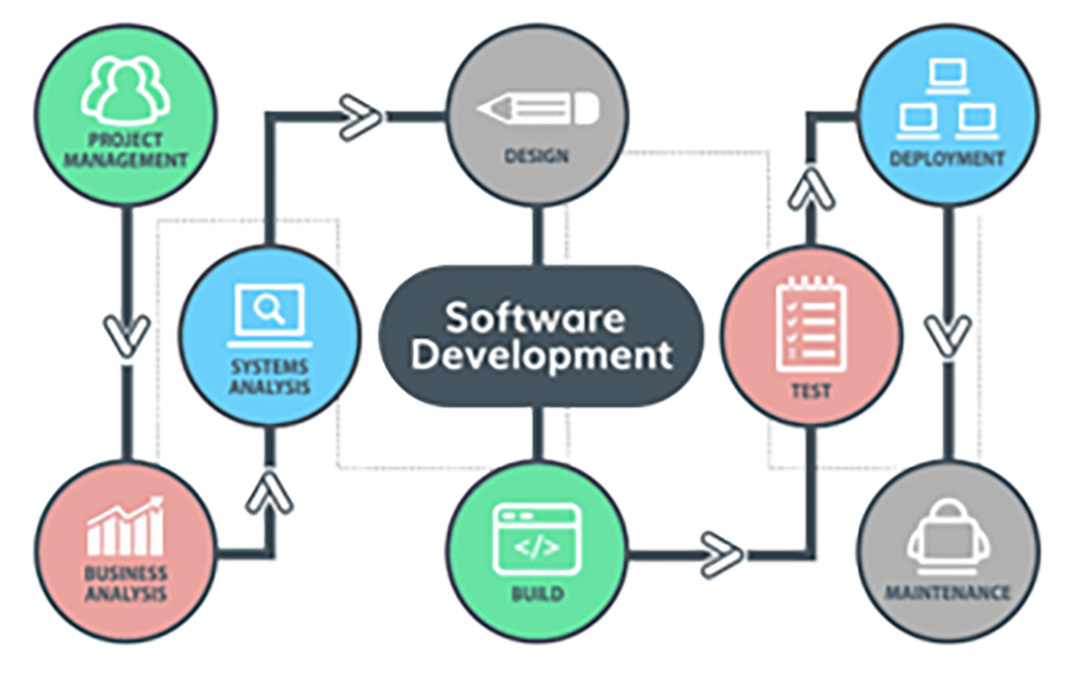
Every business has its own culture, procedure, and processes; there is no one-size-fits-all software in the market to fit all unique needs and requirements without compromising on results.
By knowing what clients are facing, their challenges, requirements and expectations, we are able to deliver a tailored-fit, customized solution with a higher success rate, shorter adaptation period, and greater flexibility.
MC Crenergy has the experience and expertise to customize technology that empowers client’s operations. A customized solution that fits client’s needs perfectly, reducing friction and resistance, while promoting greater success in adaptation & business performance.